Project
Lunabotics — PCB Design
Designed two PCBs from scratch in KiCad for Northeastern's Lunabotics lunar rover—a power distribution board and an I2C sensor bus board.
Timeline · January 2026 — Present
Summary
As part of Northeastern's Lunabotics team, I designed two PCBs that handled the rover's electrical backbone. The power distribution board regulated voltages from the main battery to safe levels for each sensor and peripheral, preventing sensitive components from getting fried.
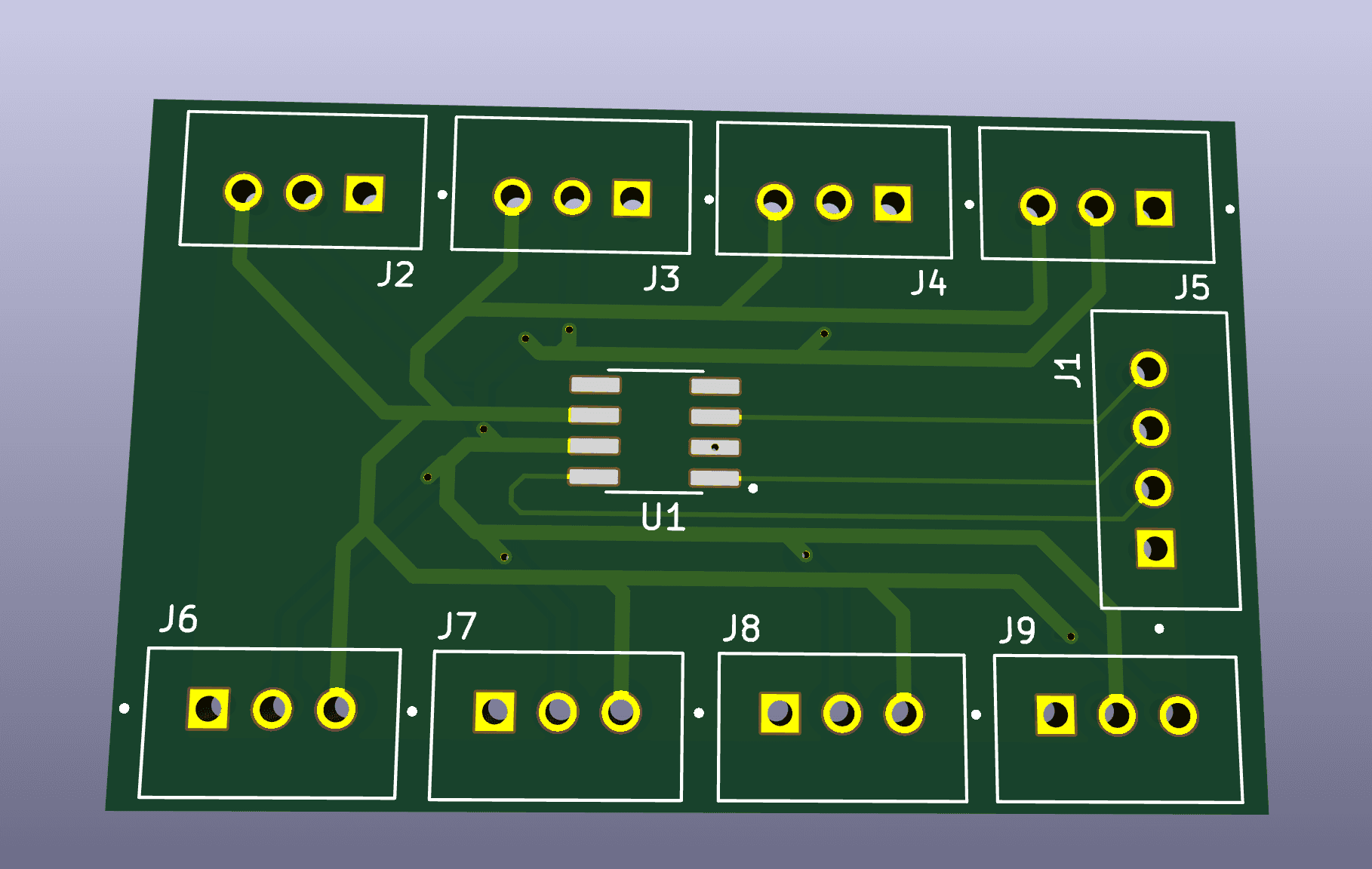
The I2C bus board served as the central hub connecting IR sensors, LiDAR, and other peripherals to the rover's main controller over a shared I2C bus. Both boards were designed from scratch in KiCad. Additionally I had zero PCB design experience going in.
Power Distribution Board
The rover runs off a main battery that delivers more voltage than most of the sensors can handle. This board steps it down to the specific voltage rails each component needs (3.3V, 5V, etc.) using voltage regulators. I selected regulators based on the current draw of each rail and added decoupling capacitors for clean power delivery.
I2C Bus Board
The I2C board is a hub—it takes the I2C data and clock lines from the main controller and fans them out to all the sensors and peripherals on the rover. IR sensors, LiDAR, and supporting devices all connect through this board. I sized the pull-up resistors for the bus based on the number of devices and bus length, chose connectors that made it easy to plug and unplug sensors during assembly and testing, and routed the layout to keep the I2C traces clean and short.
Learning Curve
This was my first time designing a PCB so I had to learn KiCad's full workflow from scratch. The hardest part was managing complexity: dozens of footprints, nets, and component placements simultaneously across two boards. Keeping schematics clean and well-labeled turned out to be just as important as getting the electrical design right.
What I'd Improve
This is an ongoing project for the NASA Lunabotics Competition, and I am attempting to continue to hone my skills through PCB design, as well as understanding how integrated systems like our rover communicate internally. A more fundamental and solidified knowledge of embedded systems, signal flow, and system-level architecture.